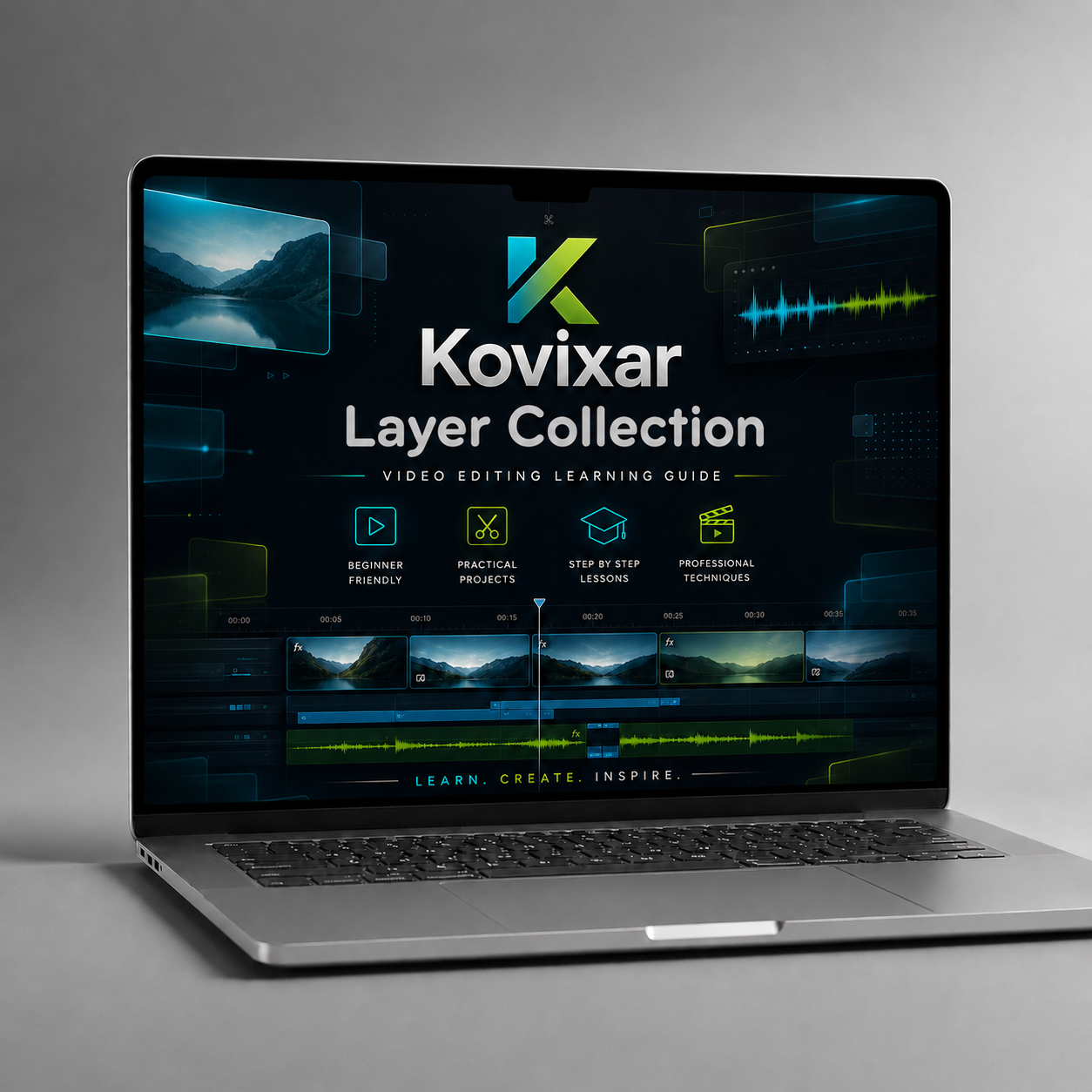
Kovixar
Layer Collection
Layer Collection
Couldn't load pickup availability
- ⬇️ Digital file available after purchase
- 🗂️ Long-term availability
- 🔒 Secure checkout
- 🗓️ Content updated in 2026
Self-paced learning overview
1. Problem Statement
When users already know the basic editing topics, a new question can appear: how to connect everything into one organized system. Rhythm may be understandable on its own, a frame may have its role, light may support the mood, but during real work these topics often overlap. Because of that, it can be difficult to know which layer to review first and what exactly needs attention in a specific scene. Sometimes a creator changes the order of frames, while the real issue is pace, or works with mood, while the scene needs a clearer structure. Layer Collection is created to help users see editing not as a group of separate decisions, but as a combination of several layers that together shape the full viewing experience.
2. Solution
Layer Collection helps organize editing thinking through a layered system. In this plan, users study how to divide a scene into several levels of review: meaning, structure, rhythm, frame, visual mood, and final check. This approach helps separate different issues and understand more clearly what should be reviewed in the material. The modules show how one layer can influence another: changing rhythm can change the feeling of a frame, visual tone can strengthen or weaken a scene, and structure can make viewing clearer. Layer Collection is suitable for those who want to work with editing through a consistent review of each part.
3. What’s Inside
Layer Collection includes a selection of modules built around the idea of layers in editing. If Echo Library gathers topics into one library, Layer Collection helps apply these topics in a specific order while working with a scene.
The first block is focused on the meaning layer. Here, users study how to define the main idea of a scene, what should remain at the center of attention, and which fragments support the main direction. This block helps users begin editing not with random frame movement, but with an understanding of what the scene is saying. The materials include self-review questions: what happens in the scene, what change should be visible, which moment is central, and which fragments repeat an already clear idea.
The second block explores the structure layer. It explains how the beginning, middle, and ending create inner order. Users study why even short material should have movement logic: opening frame, development, accent, and closing fragment. Special attention is given to how structure helps the viewer stay oriented in the events.
The third block focuses on the rhythm layer. It reviews pace, pauses, fragment length, shot changes, and the feeling of movement. Users study how rhythm can support a scene or create unevenness. The materials include examples where the scene has a logical order, but because of stretched pauses or overly dense frame changes, it loses calm perception.
The fourth block is the frame layer. It focuses on the role of each frame inside the scene. Users analyze whether a fragment has its own function, whether it repeats what has already been shown, whether it supports the transition, or whether it takes too much attention. This block connects topics from Frame Bundle, but presents them as part of a wider process.
The fifth block is focused on the visual layer. It continues themes from Luma Guide: light, tone, contrast, atmosphere, and visual sequence. Users study how to check whether a frame stands apart from the general mood, whether a sharp transition creates unnecessary tension, and whether the image supports the main scene idea.
The sixth block is the transition layer. It explains that moving between fragments is not only about the cut point. It is also a change in pace, mood, viewing direction, movement, and meaning accent. Users learn to view a transition as a separate part of editing structure, not only as a technical action.
The seventh block includes Layer Review practical exercises. They are built so users analyze one scene several times, each time through a different layer. First comes meaning, then structure, rhythm, frame, visual mood, and transitions. This format helps users avoid trying to adjust everything at once and work with material step by step.
The eighth block contains working tables for layered review. Users can write down what they notice in each layer: where the scene loses pace, which frame feels extra, where a pause is missing, which transition feels sharp, and which fragment supports the main idea. The tables help organize independent work.
Layer Collection also includes a selection of learning reviews. In them, one scene is viewed several times from different angles. This shows that an editing decision often has several causes: a scene may feel uneven not only because of frame order, but because of the combination of pace, light, pause, and fragment role.
4. Who is this for?
Layer Collection is for those who already have a basic understanding of editing and want to connect different topics into one working system. This plan suits users who want to analyze a scene not by general impression, but through specific layers: meaning, structure, rhythm, frame, and visual mood.
It also suits those who often feel that a scene does not “speak” clearly, but cannot immediately understand why. Layer Collection helps divide review into parts and see more carefully what needs attention. The plan is useful for those who want to work with editing in an organized way, without rushed or scattered changes.
5. What You’ll Learn
With Layer Collection, you can:
- view editing as a combination of several layers;
- separate a meaning issue from a rhythm or visual issue;
- define the main idea of a scene before editing;
- check the structure of the beginning, middle, and ending;
- analyze pace, pauses, and fragment length;
- better understand the role of each frame;
- notice visual changes that influence perception;
- work with transitions as a separate part of the scene;
- use tables for layered review;
- review one scene from different angles;
- build a more gathered material sequence;
- prepare for the next Kovixar plans, where there is more attention to deeper learning routes and expanded practical selections.
6. 30-Day Terms
We want working with Layer Collection to feel clear and calm. If, after ordering the plan, the materials do not match your expectations, you can contact us within 30 days. The team will review your message according to the store terms and reply with a possible resolution. In your message, please include your name, email address, order date, and a short description of the situation.
Are the courses suitable for beginners in video editing?
Are the courses suitable for beginners in video editing?
Yes, the materials are built to gradually introduce editing logic, frame rhythm, scene structure, and basic ways of working with footage.
What is included in Kovixar plans?
What is included in Kovixar plans?
Depending on the plan, you receive learning modules, written explanations, practical tasks, review examples, curated materials, and extra resources for independent study.
Do I need previous editing experience?
Do I need previous editing experience?
No, some plans are made for starting with basic topics, while higher plans gradually add more structure, practice, and deeper reviews.
Share